


Categories
Achieving bright and expressive eyes is a common goal for those looking to boost their confidence. However, the most frequent question during consultations is, "Should I choose Non-Incisional or Incisional Double Eyelid Surgery?" In reality, neither technique is superior; the choice depends on your ...
How are double eyelids formed? Exploring the dynamic art of periorbital folding Anatomically, the formation of a double eyelid is a dynamic interaction between muscle and skin. When the Levator Palpebrae Superioris (LPS) muscle contracts to open the eye, if a natural anchoring point exists between t...
Ocular asymmetry—often manifesting as a noticeable difference in eye shape or size—is rarely just a matter of the double eyelid crease. Its etiology is multifaceted, involving differences in Levator Palpebrae Superioris (LPS) muscle tension, degrees of skin laxity, and congenital structural variance...
A cataract is a natural physiological phenomenon resulting from the aging of the crystalline lens. Currently, there is no medical treatment to reverse opacification; eye drops can only slow its progression. When blurriness begins to compromise your quality of life and safety, modern, high-precision ...
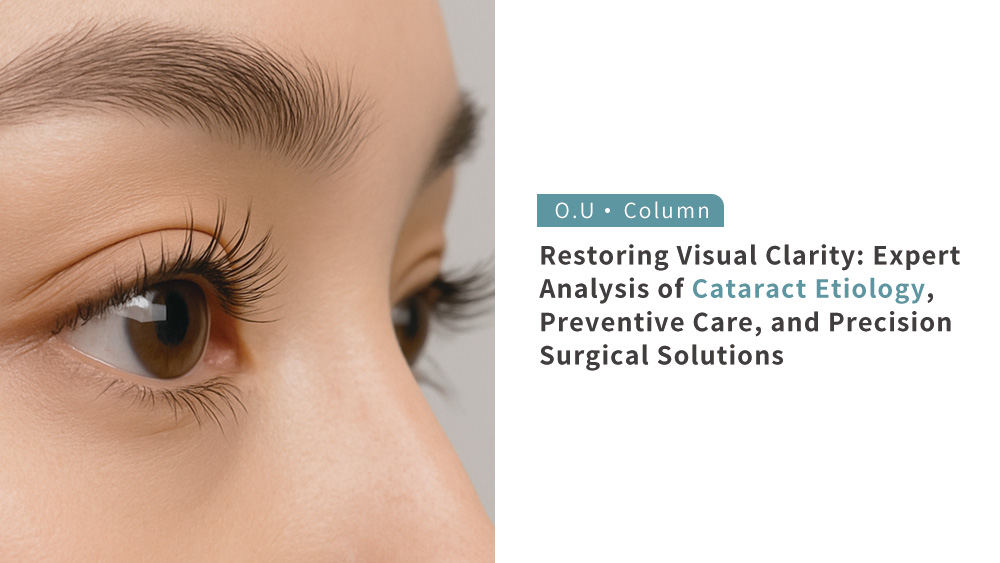
Many parents worry that their children have "crossed eyes." However, clinical evaluation often reveals this to be the common Epicanthal Fold (commonly known as the "Mongolian fold") seen in Asian children. This is a benign, physiological appearance that naturally improves as the nasal bridge develop...

Deep-set eyes or orbital hollows are not always merely a result of "fat loss." Common etiologies include excessive thinning of subcutaneous fat, Levator Palpebrae Superioris (LPS) muscle weakness, or structural aging. Blindly performing fat grafting without addressing the underlying structural tensi...
In our clinic, a common concern among patients is the gradual narrowing of their double eyelid crease, often resulting in a "hidden" or tapered appearance. Many patients assume their original stitches have "come undone" or that their double eyelids have vanished. In reality, the truth is often less ...
Before undergoing blepharoplasty, many patients frequently ask: "Can the two eyes be made perfectly identical after surgery?" Some may even notice after the procedure that the crease heights appear different when their eyes are closed. In reality, the eyelid is a dynamic, three-dimensional structure...
Blepharoplasty is a popular choice for restoring a youthful appearance and eliminating a tired look. However, as with any surgical procedure involving structural modification, there are inherent risks of imbalance. In clinical practice, Ectropion (outward eyelid turning) is the most frequent cause o...
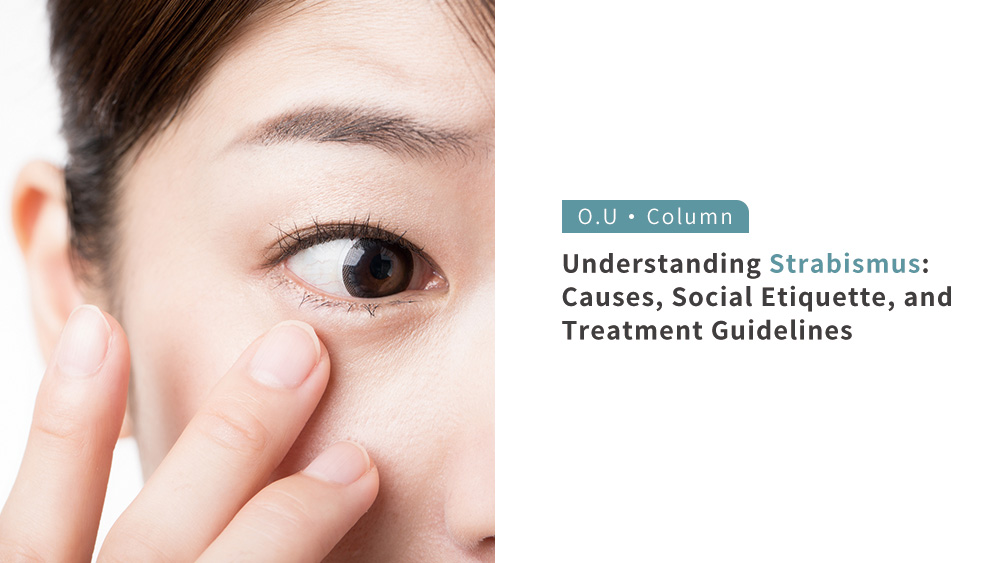
In daily life, terms like "cross-eyed" (esotropia) or "wall-eyed" (exotropia) are frequently used to describe what is clinically known as Strabismus. Because individuals with strabismus may have difficulty maintaining binocular alignment, others often mistakenly believe they are not making eye conta...
TEL 02-2700-8069
Add Our Official LINE

2F, No. 263, Sec. 1, Dunhua S. Road,Da'an District, Taipei City 106, Taiwan
Our clinic operates by appointment only.