


Ptosis Correction
2026.09.04
Ocular asymmetry—often manifesting as a noticeable difference in eye shape or size—is rarely just a matter of the double eyelid crease. Its etiology is multifaceted, involving differences in Levator Palpebrae Superioris (LPS) muscle tension, degrees of skin laxity, and congenital structural variances in periorbital tissue. When considering surgical intervention, the objective is not to “draw lines identically” on both sides, but to achieve a “dynamic balance” through precise measurement and dynamic assessment.
Common Underlying Causes: Understanding the Stereoscopic Anatomy of Asymmetry Asymmetry generally stems from three structural foundations:
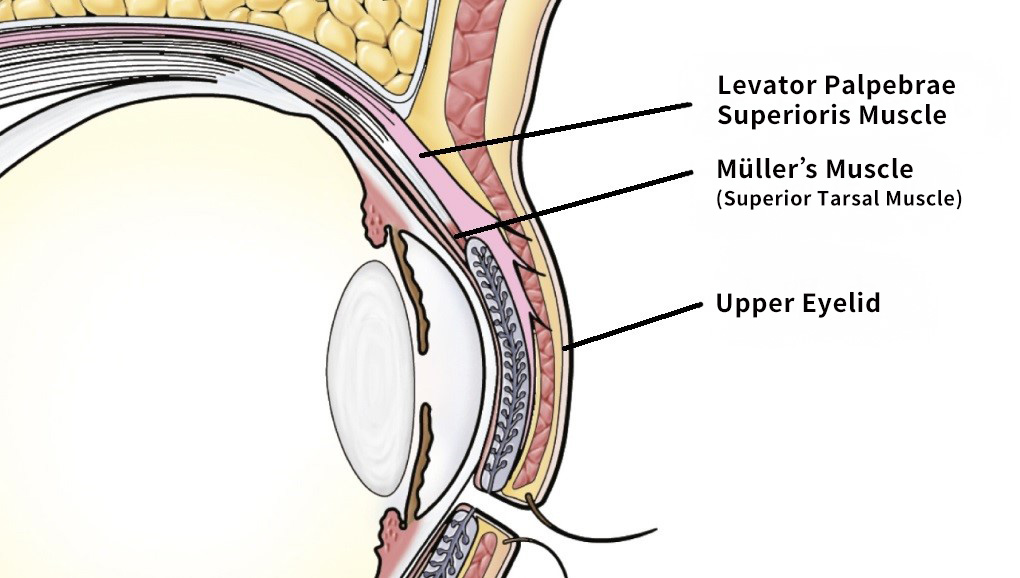
Micro-Anatomical Differentiation: Levator Weakness vs. Skin Laxity Before planning, it is critical to distinguish between muscular power and skin volume:
Breaking the Myth of Symmetry: Why “Exact Copies” Do Not Work Many patients assume that measuring identical heights and making equal incisions will yield symmetry. This is a misconception of dynamic aesthetics.
Diverse Aesthetic Spectrums Correcting asymmetry is not limited to double eyelid surgery but may involve LPS adjustment, orbital fat grafting, precision skin excision, or minimally invasive brow lifting.
FAQ: Common Questions Regarding Ocular Asymmetry
Q1: Can I use eyelid tape or contact lenses to correct asymmetry? These provide only short-term masking. Prolonged use of eyelid tape leads to loss of skin elasticity, chronic inflammation, or proliferative skin growth, which may worsen the asymmetry.
Q2: Can I just have surgery on the “smaller-looking” eye? This depends on the function of the contralateral eye. According to Hering’s Law, the brain provides equal innervation to both levator muscles. Correcting one side may trigger a compensatory ptosis on the other; therefore, bilateral synchronization is often necessary.
Q3: Can asymmetry caused by previous trauma or impact be corrected? Yes. In cases of scar adhesion or aponeurotic displacement, the surgeon can release scar tissue, re-identify healthy muscle structures, and perform re-anchoring to restore a natural appearance.
Q4: How long is the recovery period? Most swelling resolves within 1–2 weeks. Due to the differences in surgical depth, structural settling takes 3–6 months to reach the final, most natural state.
Q5: Does a “perfectly symmetrical” double eyelid exist? No. Skeletal structure and facial muscles are inherently unique. Elite surgical results strive for “harmonious dynamic balance” rather than rigid geometric symmetry.


TEL 02-2700-8069
Add Our Official LINE

2F, No. 263, Sec. 1, Dunhua S. Road,Da'an District, Taipei City 106, Taiwan
Our clinic operates by appointment only.


