


Eye bag
2026.09.04
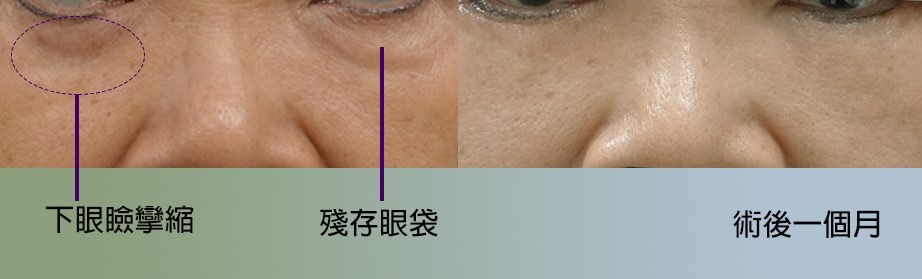
Blepharoplasty is a popular choice for restoring a youthful appearance and eliminating a tired look. However, as with any surgical procedure involving structural modification, there are inherent risks of imbalance. In clinical practice, Ectropion (outward eyelid turning) is the most frequent cause of patient dissatisfaction. Other concerns include residual eye bags, Lower Eyelid Retraction (known as “scleral show” or “inferior scleral show”), and Chemosis.
If you are facing unexpected postoperative results, do not panic. These complications are often manageable with revision surgery, provided an experienced surgeon performs a precise preoperative evaluation to identify the root cause.
Some patients experience a jelly-like swelling of the conjunctiva post-surgery, often accompanied by a foreign body sensation and tearing. This is known as Chemosis.
Normally, the lower limbus should touch or slightly overlap the lower eyelid margin. If there is visible white space below the iris, this is Lower Eyelid Retraction.
Ectropion is the most common complication, often causing dry eye syndrome, excessive tearing, foreign body sensation, and significant ocular irritation.
Blepharoplasty requires a delicate balance. Excessive fat removal risks hollowing, while insufficient removal results in a “residual eye bag.”
Q1: Can I use cold or warm compresses to accelerate the resolution of chemosis? Generally, no. Chemosis is a self-limiting condition that resolves within a month regardless of temperature therapy.
Q2: What is “Scleral Show” (Lower Eyelid Retraction)? It is the exposure of the sclera below the iris, giving the face a weary or “unhappy” appearance. It is caused by postoperative factors such as hemorrhage or aggressive tissue resection.
Q3: What are the symptoms of ectropion? Patients typically experience dry eyes, epiphora (excessive tearing), foreign body sensation, and severe irritation due to the eyelid failing to conform to the eyeball.
Q4: How is revision surgery handled? The approach is strictly dictated by the root cause: releasing contractures, tightening lax tissues, performing reconstructive lifting, or adding volume via fillers/implants.
Q5: If eye bags persist after surgery, is it always due to incomplete fat removal? Not necessarily. While under-resection is a cause, persistent bulging can sometimes be attributed to underlying muscle atrophy or injury, which may require orbicularis oculi reconstruction rather than further fat removal.


TEL 02-2700-8069
Add Our Official LINE

2F, No. 263, Sec. 1, Dunhua S. Road,Da'an District, Taipei City 106, Taiwan
Our clinic operates by appointment only.


