


Double Eyelid Surgery
2026.09.04
Before undergoing blepharoplasty, many patients frequently ask: “Can the two eyes be made perfectly identical after surgery?” Some may even notice after the procedure that the crease heights appear different when their eyes are closed.
In reality, the eyelid is a dynamic, three-dimensional structure. A crease that looks identical when the eyes are closed does not necessarily equate to a symmetrical visual effect when the eyes are open. Here, our specialist breaks down the critical details behind achieving aesthetic symmetry.
Many assume a double eyelid crease is merely a static line on the skin. However, the same crease shape will manifest differently based on individual ocular anatomy:
Consequently, even if the markings appear identical when the eyes are closed, the result when the eyes are open may differ due to these underlying structural variances.
To ensure the eyes appear symmetrical upon opening, surgeons may intentionally plan “asymmetrical” lines while the eyes are closed. This is a personalized design strategy—sometimes, the lines must look different in a static (closed) state to achieve perfect visual symmetry in a dynamic (open) state.
A skilled surgeon does not merely draw identical lines on the closed skin; they meticulously calculate the visual result upon opening by assessing these five structural factors:
The key to a successful blepharoplasty is not just drawing lines; it lies in accurately predicting the outcome when the eyes are open. This relies entirely on the surgeon’s experience and their ability to perform a detailed preoperative assessment and dynamic simulation to ensure patient satisfaction.
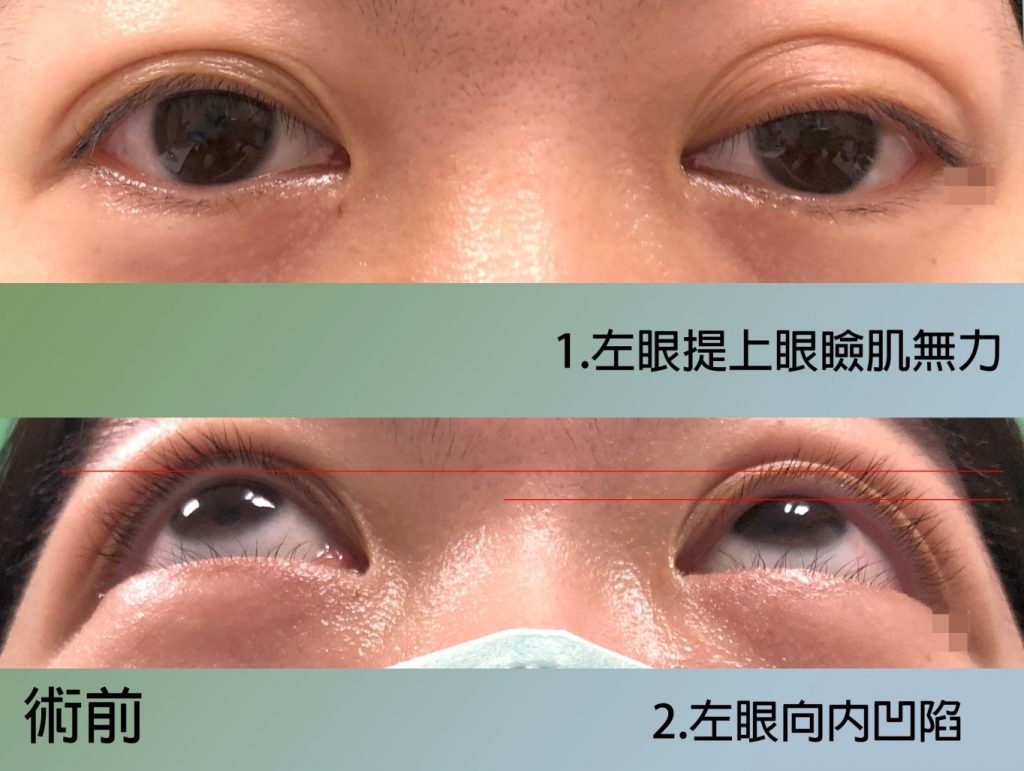
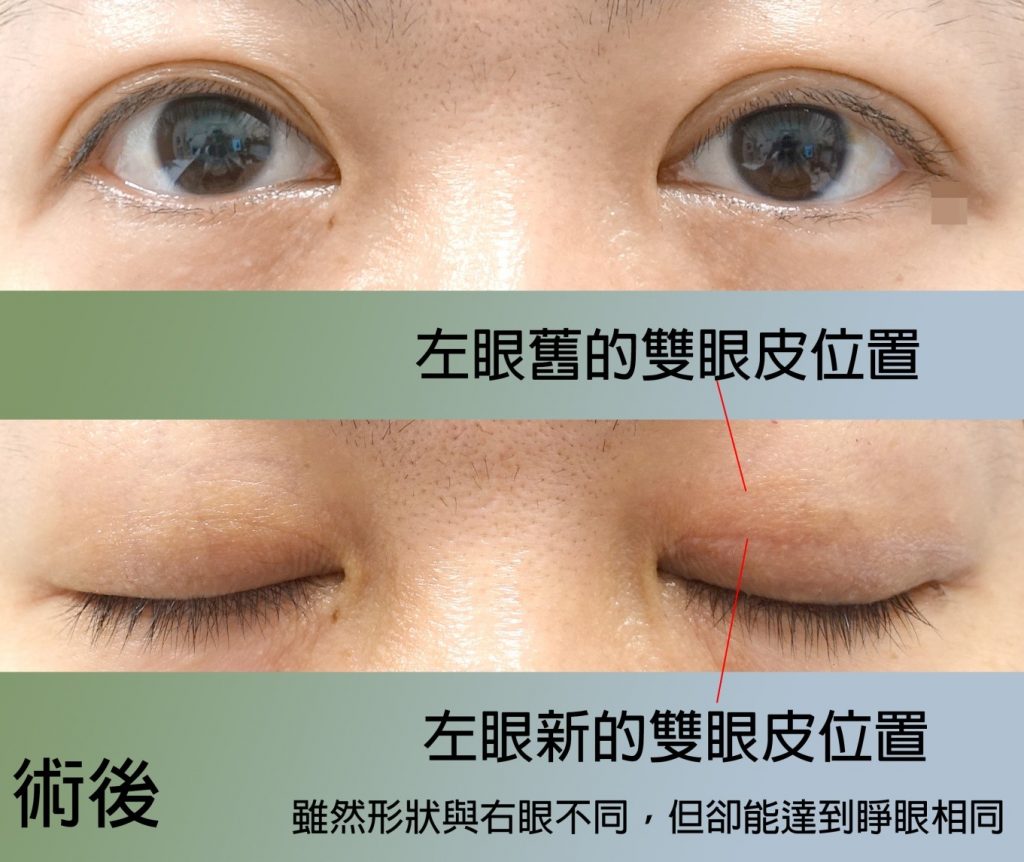
Q1: If the crease lines are drawn identically while closed, will they be symmetrical when open? Not necessarily. Because the eyelid is a dynamic 3D structure, factors such as orbital depth and levator muscle strength mean that identical markings do not guarantee identical open-eye results. Planning must be based on the projected “open-eye” result.
Q2: Why do the crease lines look different when my eyes are closed after surgery? This is often an intentional design choice. If your natural anatomy is asymmetrical, the surgeon must plan different lines while closed to achieve symmetry when you open your eyes.
Q3: What other facial structures affect double eyelid symmetry? Structural details beyond the eyelid itself—such as brow bone prominence, lateral drooping, differences in epicanthic folds, and eyelid fat volume—all play a significant role.
Q4: How does levator muscle strength affect the appearance of a double eyelid? The levator muscle controls how much skin is “folded in” when opening the eye. If the strength differs between the two eyes, the depth and height of the crease will appear asymmetrical, even if the incision lines are identical.
Q5: How can I prevent severe asymmetry after surgery? The most important step is choosing an experienced surgeon. Because the eyelid is dynamic, a professional must conduct a comprehensive assessment—considering orbital structure, fat, epicanthic folds, and brow position—to create a bespoke surgical plan.


TEL 02-2700-8069
Add Our Official LINE

2F, No. 263, Sec. 1, Dunhua S. Road,Da'an District, Taipei City 106, Taiwan
Our clinic operates by appointment only.


