


Ptosis Correction
2026.09.04
“Looking tired” is not always a matter of insufficient sleep; it is often caused by Ptosis (drooping eyelid), which partially obstructs the gaze. This condition affects not only facial aesthetics but, in severe cases, can impact the visual field and lead to compensatory forehead strain. Surgical correction requires precise planning based on the underlying etiology—whether it is muscular weakness or skin laxity—to avoid complications such as postoperative asymmetry or incomplete eyelid closure.
In our clinic, patients frequently present with similar concerns:
The common culprit behind these issues is Ptosis (Levator Palpebrae Superioris muscle weakness). Beyond being a cosmetic concern, if the eyelid obscures a significant portion of the visual axis, it warrants a professional diagnosis.
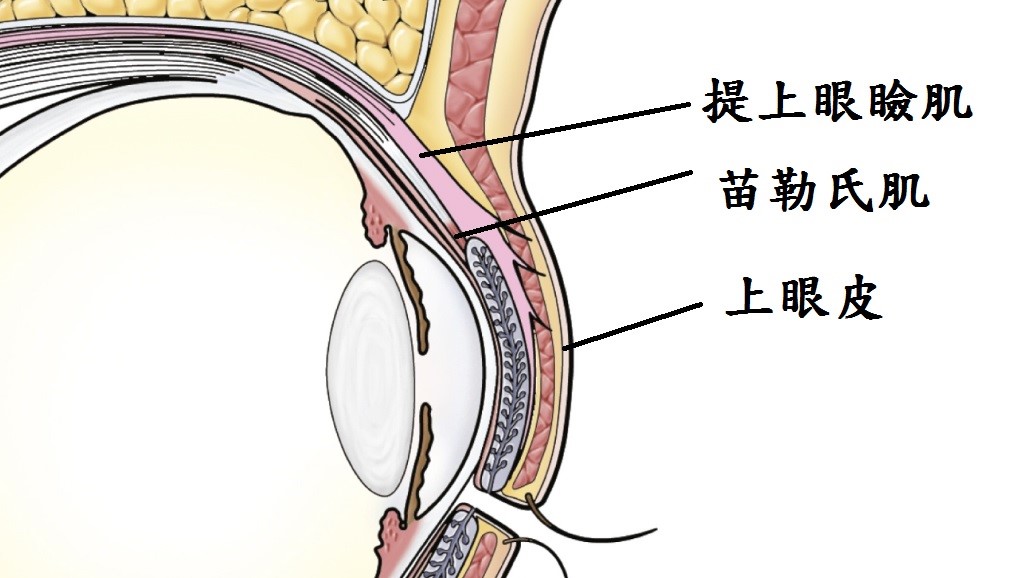
Upper eyelid movement relies primarily on two muscles: the Levator Palpebrae Superioris (LPS) and the Müller’s Muscle.
Some patients may not appear severely ptotic, yet they suffer from deep forehead lines. Because the levator muscle lacks sufficient strength, the brain subconsciously recruits the Frontalis Muscle to elevate the eyebrows, which in turn pulls the eyelids up. Over time, this chronic contraction results in prominent forehead wrinkles.
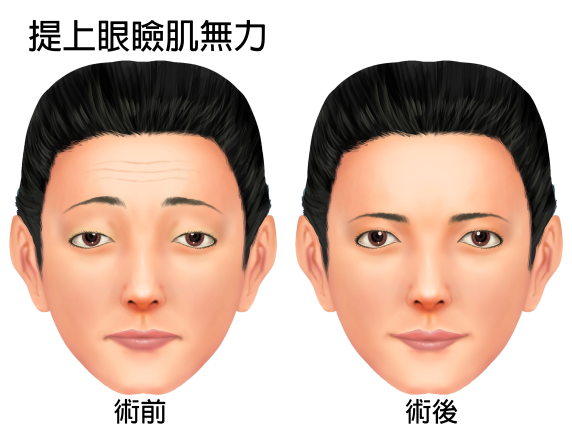
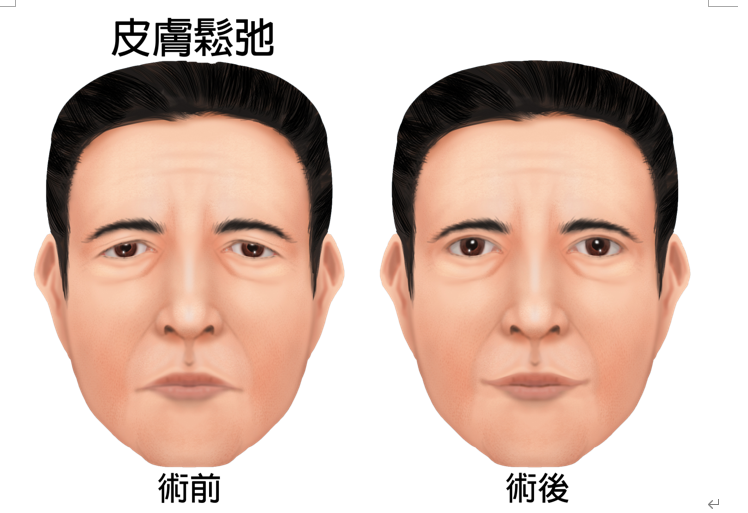
Misdiagnosis before surgery is the leading cause of postoperative asymmetry:
Simple Self-Assessment Method
Stand in front of a mirror and observe:
If you observe an abnormally high eyebrow position or feel significant effort when opening your eyes, it is recommended to consult a professional ophthalmologist.
Q1: Is congenital eyelid asymmetry a sign of ptosis? Very likely. Many individuals with congenital asymmetry suffer from an “expressionless” eye due to weaker levator muscle function. A professional evaluation is recommended to confirm muscle function.
Q2: What should I do if I look tired even after sleeping well? This is often related to ptosis, where the eyelid obscures more than 2mm of the iris. It is advisable to consult a physician regarding potential eyelid structure adjustments.
Q3: Is early onset of forehead wrinkles related to eyelid muscle issues? Yes, there is a strong correlation. This is often a sign of “hidden ptosis” and the resulting compensatory mechanism.
Q4: For elderly patients, is it enough to just trim the excess skin? Not recommended. If levator muscle function is not assessed, blindly trimming redundant skin can lead to postoperative asymmetry or lagophthalmos (inability to fully close the eyelids), which jeopardizes corneal health.
Q5: Is the surgical approach the same for everyone? No. An ophthalmologist will plan surgery based on the strength of your levator muscle function, whether it is a revision surgery, and your specific anatomical conditions. Surgical safety and accurate preoperative assessment are the most critical factors.


TEL 02-2700-8069
Add Our Official LINE

2F, No. 263, Sec. 1, Dunhua S. Road,Da'an District, Taipei City 106, Taiwan
Our clinic operates by appointment only.


